Top Private Universities in Punjab: Best Higher Education Institutions
2026-04-25

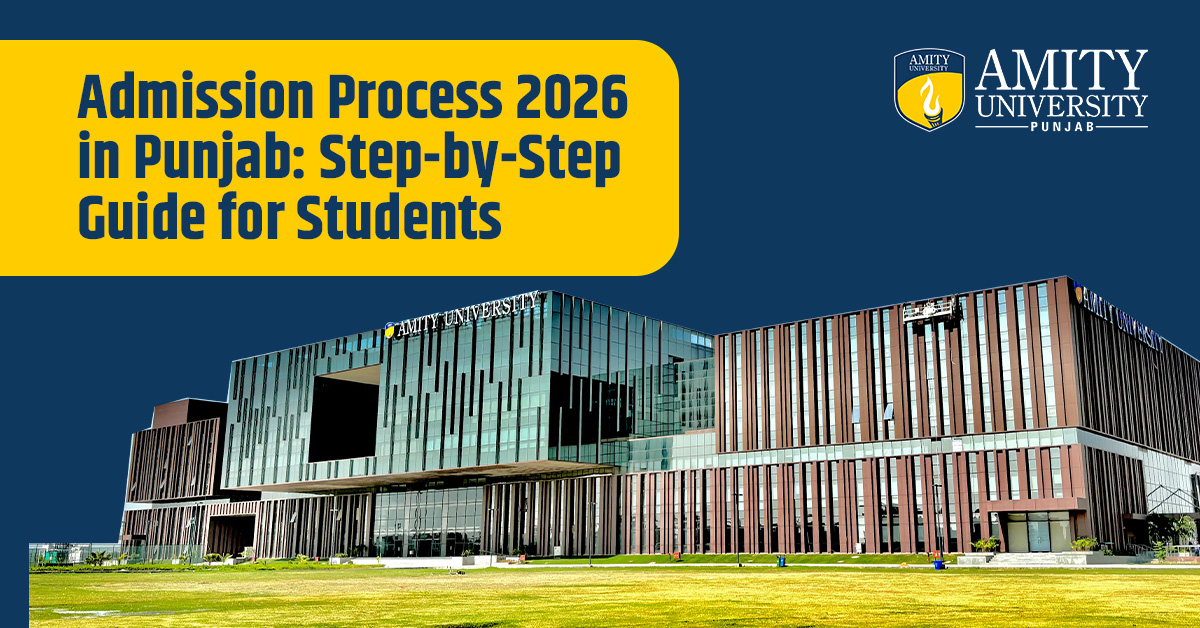
Every year, students step into the admission process in 2026, thinking it’s just about filling out a form and getting into a college. Then reality hits. There are eligibility rules, entrance exams, interviews, deadlines, and suddenly everything feels confusing.
What actually matters is not just getting admission, but choosing the right course and path. The decisions made at this stage decide what skills you build, what kind of jobs you qualify for, and how your career grows in the next few years. That is why understanding the process clearly from the start makes a big difference.
1. Course Selection Confusion
Students often struggle to choose the right program because they are unsure about career outcomes, required skills, and future scope. This leads to decisions based on trends instead of personal fit.
2. Eligibility and Criteria Gaps
Each course comes with specific academic requirements, subject combinations, and entrance criteria. Missing even one condition can make an application invalid, yet many students do not check these details carefully.
3. Timeline and Deadline Mismanagement
Admission schedules involve multiple stages such as applications, exams, results, and interviews. Without proper tracking, students miss deadlines or rush applications at the last moment.
4. Lack of Process Awareness
A major issue is not understanding the exact college admission steps that Punjab universities follow. Students skip stages, submit incomplete forms, or fail to prepare for the next round because they do not see the full picture.
5. Entrance Exam Preparation Issues
Students either start late or prepare without a clear strategy. This affects performance in key entrance exams that play a major role in final selection.
6. Documentation Errors
Incorrect uploads, missing certificates, or unclear scans create problems during verification. These small mistakes can delay or impact admission decisions.
7. Weak Interview Preparation
Many students overlook the importance of interviews. They struggle to explain their course choice, career plans, or strengths, which affects their final selection.
The admission process across Punjab universities follows a structured pattern. While details vary slightly by institution, the core steps remain consistent.
Step 1: Research and Course Selection
Students begin by identifying courses aligned with their interests and career plans. Engineering, management, law, and design remain among the most preferred options. Each program has specific eligibility and entrance requirements.
Most universities provide online portals where students fill in personal, academic, and contact details. Accuracy is critical, as incorrect information may lead to rejection.
Applicants must upload scanned copies of their academic records and identification documents. The documents required for admission usually include:
Class 10 and 12 mark sheets
Graduation certificates for PG programs
Valid ID proof
Passport-size photographs
Some programs require entrance scores. Common entrance exams in Punjab 2026 include JEE Main for engineering and national-level tests for management. Merit-based admissions are also available for select courses.
Shortlisted candidates may undergo a personal interview or video assessment. This stage evaluates communication skills, subject knowledge, and career clarity.
Universities release selection lists based on academic scores, entrance performance, and interviews.
Students confirm admission by paying the initial fee and completing verification formalities. This structured admission process ensures transparency and fair evaluation across institutions.
Selecting a course is not only about what a student enjoys studying today, but also about how that choice translates into skills, job roles, and long-term career growth. A well-chosen program builds a strong foundation, offers practical exposure, and aligns with industry demand.
Duration: 3 to 4 years, depending on the course
Eligibility: Completion of Class 12 with minimum 50 to 60 percent marks, subject requirements vary by program
Popular options: BTech, BBA, BSc, BA
Undergraduate programs focus on building core knowledge along with early exposure to practical learning. In professional courses like BTech and BBA, students are introduced to internships, live projects, and industry case studies from the second or third year. This helps them understand real-world applications before graduation.
Duration: Typically 2 years
Eligibility: Graduation in a relevant field with the required minimum marks
Popular options: MBA, MSc, MA
Postgraduate programs are designed for specialization. Students move from general concepts to focused areas such as finance, marketing, data analytics, or applied sciences. These programs often include research work, industry projects, and internships that strengthen domain expertise.
Modern programs are structured to combine theoretical understanding with practical exposure. Instead of only classroom lectures, students engage in:
Case-based learning to solve real business or technical problems
Project work that simulates industry challenges
Internships that provide hands-on experience
Workshops and seminars led by industry professionals
Analytical thinking: Ability to evaluate data, identify patterns, and make informed decisions
Communication skills: Presenting ideas clearly in academic and professional settings
Technical expertise: Hands-on knowledge in tools, technologies, or domain-specific concepts
Problem-solving ability: Applying concepts to real-world scenarios
Teamwork and leadership: Working in groups and managing responsibilities effectively
Choosing the right course ensures alignment with future job roles. For example:
BTech graduates move into roles like software development, data analysis, or engineering design
BBA and MBA students enter fields such as marketing, finance, consulting, and operations
Science graduates pursue research, analytics, or specialized industry roles
Students who focus on both academics and skill development during their course tend to see better placement outcomes and career growth opportunities.
A structured approach brings clarity to each stage of admission, helping students move with purpose instead of confusion. When every step is planned in advance, it becomes easier to manage timelines, meet requirements, and make informed choices without feeling overwhelmed.
Keeps every step on track with clear visibility of deadlines and milestones
Helps shortlist the right courses based on career goals and eligibility
Allows focused and timely preparation for required entrance exams
Ensures all documents are ready, verified, and submitted without errors
Makes applying to multiple colleges more organized and manageable
Supports clear and confident decisions during the admission counselling process
Clarity in the admission counselling process also ensures better decision-making when choosing between multiple offers.
Choosing the right course directly impacts employability and salary outcomes. Across Punjab and India, certain trends are consistent:
Engineering graduates in the AI and data science fields often secure starting salaries ranging from INR 12 to 18 LPA
Management graduates from reputed institutions report average packages between INR 10 to 15 LPA
Skill-based programs with internships show higher placement rates
Fees for professional courses vary:
Engineering programs: INR 1.5 to 3 lakh per year
Management programs: INR 3 to 6 lakh per year
Students should evaluate return on investment by comparing fees with placement outcomes and career growth.
Students often compare institutions to make informed decisions. Below is an objective comparison:
|
Criteria |
IITs |
Government Universities |
NIIT University |
Amity University Mohali |
|
Admission Mode |
Highly competitive entrance |
Merit + entrance |
Entrance + aptitude |
Merit + entrance + interview |
|
Curriculum |
Research-focused |
Traditional |
Industry-integrated |
Industry-oriented with practical exposure |
|
Fees Range |
High but subsidized |
Affordable |
Moderate to high |
Moderate |
|
Placement Opportunities |
Strong global exposure |
Moderate |
Industry-linked |
Strong corporate connections |
|
Skill Development |
Technical depth |
Academic focus |
Skill-based |
Balanced academic + practical |
This comparison helps students understand where they fit based on goals, budget, and academic readiness.
Students evaluating universities in Punjab often look beyond just course availability. They focus on placement outcomes, industry exposure, and how well the curriculum prepares them for real roles. A strong academic environment is one that connects learning with employability, and that is where this institution positions itself.
Programs are designed with inputs from industry professionals, ensuring students learn concepts that match current job roles. This helps bridge the gap between classroom learning and workplace expectations, especially in fields like data science, management, and engineering.
The university has built a consistent placement performance over recent years:
Placement rate reaches around 85 to 90 percent in multiple programs
Median salary stands at ₹10 LPA for UG and ₹15 LPA for PG programs
Average packages in several programs range between ₹12 to ₹118 LPA
Highest packages have gone up to ₹2 crore in top cases
These numbers indicate a stable placement trend with opportunities across roles like data analyst, business consultant, and software engineer.
More than 300 to 500 companies visit the campus, including global brands across technology, consulting, and finance. Students interact with recruiters through internships, live projects, and placement drives, which improves job readiness.
Internships are built into the course structure, allowing students to gain hands-on experience before graduation. Many students secure internships with 80 to 90 percent participation in some programs, which directly contributes to better placement outcomes.
The campus includes advanced labs, digital classrooms, and research facilities that support applied learning. Students get access to tools and environments similar to real industry settings, especially in technical and management programs.
Beyond academics, the university emphasizes:
Communication and presentation skills
Leadership and teamwork
Analytical and problem-solving abilities
This balanced approach ensures students are prepared not just for exams but also for workplace expectations.
The admission process is clearly defined, with steps including application, document submission, evaluation, and selection. This transparency helps students understand where they stand at every stage and reduces uncertainty.
The university offers programs across engineering, management, sciences, and humanities. Students can choose specialized fields like AI, cybersecurity, finance, or marketing, aligning their education with specific career paths.
Understanding eligibility is essential before applying.
UG programs: Minimum 50 to 60 percent in Class 12
PG programs: Graduation with required marks
Undergraduate: 3 to 4 years
Postgraduate: 2 years
Academic transcripts
Entrance scores where applicable
Interview performance
The admission process 2026 ensures that students are evaluated on multiple parameters, not just marks.
Many applicants lose opportunities due to avoidable errors.
Submitting incomplete forms
Uploading incorrect documents
Ignoring eligibility criteria
Missing deadlines
Not preparing for interviews
Avoiding these mistakes improves the chances of securing admission in preferred programs.
The journey through admissions becomes easier when students follow a structured approach. From selecting the right course to understanding eligibility and preparing documents, each step plays a vital role in shaping future success.
The admission process is designed to identify students who are not only academically capable but also ready for professional challenges. Careful planning, timely applications, and informed decisions can make a significant difference in outcomes.
For students seeking a balanced academic environment with industry exposure, exploring programs at Amity University Mohali can be a valuable step. Visit the official website to review courses, eligibility, and application details, and take the next step toward building a strong career path.
What is the first step in the admission process?
Start by choosing the right course based on your interests and career goals, then check eligibility before applying.
Are entrance exams mandatory for all courses?
No, some programs require entrance exams, while others offer merit-based admission.
When should students apply for 2026 admissions?
Applications usually open between January and March, so early preparation is important.
How important is the interview round?
It helps evaluate communication skills and clarity of career goals, which can impact selection.
Can students apply to multiple universities?
Yes, applying to multiple options helps students compare and choose the best fit.