Future of Artificial Intelligence Careers in Punjab: Jobs & Salary (2026)
Artificial Intelligence is reshaping how industries operate and how businesses make decisions. In India, AI and data roles are steadily increasing, with entry-level salaries starting from INR 8 LPA. Students in Punjab are now focusing on career paths that offer both stability and long-term relevance.
As traditional options become more competitive, roles like data analyst and machine learning engineer are seeing steady demand in Chandigarh and Mohali. A career in artificial intelligence aligns closely with industry needs across healthcare, agriculture, finance, and logistics.
With a growing IT ecosystem, AI careers in Punjab are becoming more accessible. Mohali alone hosts over 1,500 companies, creating consistent demand for skilled professionals. Students now have the opportunity to build relevant skills locally without relocating.
Why Are Students Considering an AI Career in Punjab?
Students today are looking for careers that offer both financial stability and long-term relevance. The increasing integration of AI into everyday business processes has created a consistent demand for skilled professionals.
Punjab is gradually transforming into a technology-enabled region. IT parks, startup ecosystems, and government-backed innovation initiatives are contributing to this growth. This has opened up multiple career opportunities in artificial intelligence within the state itself.
Another important factor is accessibility. Students in Punjab can pursue AI-related courses without relocating to expensive metro cities. This balance between affordability and opportunity makes AI careers in Punjab a realistic and achievable goal.
The question many students ask is simple: Will this field remain relevant in the future? Current trends indicate that the future of AI jobs is not only stable but expanding across industries.
Choosing the Right Course for a Career in AI
Selecting the right course is the first step toward building a strong foundation. Students can enter this field through undergraduate or postgraduate programs, depending on their academic background.
Common pathways include B.Tech in Computer Science, BCA, or B.Sc in Data Science. For students interested in management roles, MBA programs with a focus on Business Analytics or AI integration are highly relevant.
Course Details at a Glance
|
Parameter |
Details |
|
Eligibility |
10+2 with Mathematics for UG, Graduation for PG |
|
Duration |
4 years (UG), 2 years (PG) |
|
Specializations |
AI, Data Science, Business Analytics |
|
Mode |
Full-time with practical exposure |
Students often explore different artificial intelligence career paths before choosing a course. The key is to select a program that combines technical learning with real-world application.
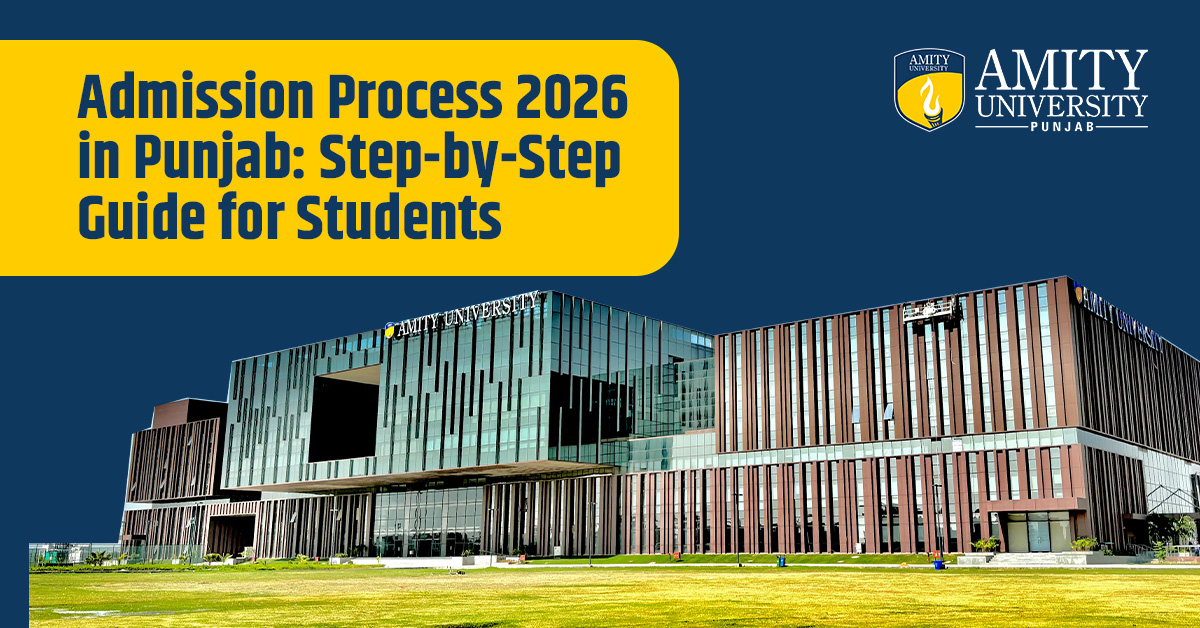
Admission Process and Eligibility Requirements
Understanding the admission process at Amity Mohali helps students plan their next steps with clarity.
Most institutions follow a structured process that includes application submission, academic evaluation, and sometimes a personal interview. Some universities also consider entrance exam scores, while others focus on academic performance and aptitude.
General Admission Steps
-
Fill out the application form online or offline
-
Submit academic records and required documents
-
Appear for the entrance test or interview if applicable
-
Receive admission confirmation and complete enrollment
Students who are researching how to start career in artificial intelligence should begin preparing early, especially focusing on mathematics, logical reasoning, and basic programming knowledge.
Essential Skills for Building a Successful AI Career
Building a successful AI career requires more than just theoretical knowledge. Students need a balanced combination of technical expertise, analytical thinking, and practical exposure to handle real-world challenges. As industries continue to adopt AI-driven solutions, the expectations from professionals are becoming more skill-focused and application-oriented.
Understanding what to learn and how to apply it is crucial for long-term growth. Developing the right skills not only improves employability but also helps students navigate different roles within the field.
The following areas highlight the key competencies required to build a strong foundation in AI.
Strong Foundation in Programming and Technical Tools
A successful AI career begins with a solid understanding of programming languages such as Python and R, as these are widely used for building models and handling data. Students also need to learn how machine learning algorithms work, including supervised and unsupervised learning techniques. In addition, working with data visualization tools helps in presenting insights clearly. Familiarity with platforms like TensorFlow, along with basic knowledge of cloud technologies, prepares students to work on real-world AI applications.
Understanding of Data and Analytical Thinking
AI is built on data, which makes analytical thinking a core requirement. Students must learn how to clean, organize, and interpret large datasets to identify patterns and trends. This ability helps in making accurate predictions and supporting decision-making processes. A strong grasp of statistics and logical reasoning enhances the ability to solve complex problems, which is essential for most AI roles.
Importance of Soft Skills in AI Roles
Technical expertise alone is not enough to succeed in AI. Professionals need strong communication skills to explain complex findings in a simple and understandable way. Critical thinking allows them to evaluate different approaches before selecting the most effective solution. Problem-solving skills help in addressing real-world challenges where data may not always be structured or complete. These soft skills ensure that AI solutions are practical and aligned with business needs.
Hands-On Experience Through Projects and Internships
Practical exposure plays a major role in building confidence and competence. Students who work on real-world projects gain a better understanding of how AI systems are developed and implemented. Internships provide industry experience, helping students learn how companies use AI to solve business problems. Case studies further strengthen this learning by exposing students to real scenarios and decision-making processes.
Continuous Learning for Evolving AI Technologies
AI is a rapidly evolving field, which means learning does not stop after completing a course. New tools, frameworks, and techniques are introduced regularly, requiring professionals to stay updated. Students who actively follow industry trends, participate in online courses, and explore new technologies are better prepared for long-term growth. Continuous learning ensures that they remain relevant and competitive across different career options in artificial intelligence.
Top Career Opportunities in Artificial Intelligence
Artificial Intelligence offers a wide range of career paths that combine technical expertise with real-world problem-solving. Students can choose roles based on their interests in coding, data analysis, research, or business applications. The diversity of roles makes it easier to build long-term growth within the field.
AI Engineer
AI Engineers design and develop intelligent systems that can automate tasks and improve decision-making. They work with machine learning models, neural networks, and large datasets to build scalable solutions. This role requires strong programming skills and a deep understanding of algorithms. With the rising AI engineer demand in Punjab, professionals in this role are seeing increasing opportunities across IT firms and analytics-driven industries.
Data Scientist
Data Scientists analyze structured and unstructured data to identify patterns and generate insights. They use statistical methods and machine learning techniques to support business decisions. This role is widely in demand across industries such as finance, healthcare, and e-commerce.
Machine Learning Engineer
Machine Learning Engineers focus on building and optimizing algorithms that enable systems to learn from data. They work closely with data scientists to deploy models into real-world applications. This role requires strong knowledge of programming, data structures, and model optimization.
Business Intelligence Analyst
Business Intelligence Analysts translate data into actionable insights for organizations. They create reports, dashboards, and visualizations that help businesses make informed decisions. This role is suitable for students who want to combine analytics with business understanding.
NLP Engineer (Natural Language Processing)
NLP Engineers work on systems that understand and process human language, such as chatbots, voice assistants, and translation tools. This role involves working with text data, linguistics, and machine learning models.
AI Product Manager
AI Product Managers oversee the development and implementation of AI-based products. They act as a bridge between technical teams and business stakeholders, ensuring that solutions align with market needs and user expectations.
Salary Trends for AI Professionals in Punjab
Salary expectations play a crucial role in career planning. The artificial intelligence career salary varies depending on experience, skills, and job role.
Salary Breakdown
|
Experience Level |
Average Salary (Punjab) |
|
Entry-Level |
₹10 LPA |
|
Mid-Level |
₹12 LPA – ₹18 LPA |
|
Senior-Level |
₹20 LPA+ |
These figures are aligned with national trends, although graduates from premier institutions like IITs often receive higher packages due to strong industry connections.
Government universities offer affordable education but may have varied placement outcomes depending on specialization. NIIT University emphasizes industry collaboration and practical exposure, which supports employability.
The career in artificial intelligence salary continues to grow as companies invest more in automation and data-driven decision-making.
Key Advantages of Pursuing AI as a Career
Students often ask, is artificial intelligence a good career for long-term growth. The answer depends on how well the field aligns with individual interests and strengths.
AI offers high earning potential, strong job demand, and opportunities to work on real-world problems. Professionals can switch between industries, which adds flexibility to their career path.
Another advantage is global exposure. Many AI professionals work with international clients or remote teams, expanding their career opportunities beyond geographical boundaries.
The diversity of roles ensures that students can choose paths that match their skills, whether technical, analytical, or managerial.
Comparing Top Institutions for AI Education
Choosing the right institution requires careful evaluation of multiple factors. Instead of relying only on descriptions, a comparison table provides clarity.
Institution Comparison
|
Factor |
IITs |
NIIT University |
Government Universities |
AGBS Mohali |
|
Focus |
Research & Technology |
Industry Collaboration |
Academic Foundation |
Business + Analytics Integration |
|
Fees |
High |
Moderate |
Low |
Moderate |
|
Industry Exposure |
Strong |
Strong |
Moderate |
Strong |
|
Curriculum Style |
Technical |
Practical |
Theoretical |
Application-Based |
|
Placement Support |
High |
High |
Varies |
Structured |
Students should choose based on their career goals. Those interested in research may prefer IITs, while others looking for industry-oriented learning may benefit from institutions that focus on practical exposure.
Why Choose Amity University Mohali for AI-Focused Education?
Choosing the right institution plays a critical role in shaping a student’s career, especially in a field like AI where industry relevance and practical exposure matter. Students today look for programs that not only provide academic knowledge but also prepare them for real job roles through structured learning and skill development.
Industry-Aligned Curriculum
At Amity University Punjab the curriculum is designed to match current market needs, combining management fundamentals with exposure to analytics and data-driven decision-making. This helps students understand how AI integrates into real business environments.
Structured UG and PG Programs
Programs such as GDBA + BBA (3 years) and PGPM + MBA (2 years) provide a clearly defined academic pathway. Students begin with foundational concepts in business and gradually move toward advanced topics like analytics and strategic management. This structure ensures continuity in learning and allows students to build both technical understanding and managerial perspective over time.
Strong Placement Ecosystem
The institution maintains a structured placement process supported by a wide network of recruiters across industries. Students receive guidance through resume building, interview preparation, and skill assessments. Placement trends across similar programs show that roles in analytics, consulting, and management are commonly offered, reflecting alignment with current market demand.
Practical Learning Approach
Learning is supported through case studies, live projects, and internship opportunities. These elements help students understand how theoretical concepts are applied in real business scenarios. Internships provide exposure to workplace environments, allowing students to gain experience in handling data, solving business problems, and working in teams.
Focus on Career-Ready Skills
In addition to technical knowledge, the programs emphasize communication, leadership, and decision-making skills. Students participate in presentations, group discussions, and collaborative assignments, which help them build confidence and improve their ability to communicate insights effectively. These skills are essential for roles where AI solutions need to be explained and implemented within organizations.
Defined Fee Structure and ROI
The programs are offered within a structured fee range, typically around ₹3.9 lakh for undergraduate courses and ₹6 lakh for postgraduate programs. This allows students to plan their investment with clarity. When combined with placement support and skill development, the overall return on investment becomes more structured and outcome-focused.
Conclusion
Artificial Intelligence is not just a trend but a long-term shift in how industries function. Students in Punjab have access to growing opportunities, structured education pathways, and a supportive ecosystem.
Building a successful career requires careful planning, the right course selection, and continuous skill development. From diverse job roles to competitive salary prospects, the field offers strong potential for growth.
For students exploring structured programs that combine business insights with emerging technologies, Amity University Mohali provides a practical pathway to develop relevant skills and industry readiness.
Secure Your Seat for a Future-Ready Career
Artificial Intelligence is shaping the next phase of careers, and early action can give you a clear advantage. Choosing the right program now helps you build relevant skills and stay aligned with industry demand. Planning ahead ensures you are prepared for emerging opportunities in AI and analytics.
Apply Now at Amity University Mohali
FAQs
What is the starting salary for Artificial Intelligence jobs in Punjab?
Entry-level salaries typically start from INR 8 LPA per year.
Do I need coding skills for AI careers?
Basic programming knowledge is essential, especially in languages like Python.
Can I pursue AI after graduation in a non-technical field?
Yes, through postgraduate programs or certifications in analytics and AI.
Are AI jobs available for freshers in Punjab?
Yes, especially in roles such as data analysis, junior AI development, and business analytics.
How long does it take to build a career in AI?
It usually takes 2 to 4 years of focused education and skill development.