Top Private Universities in Punjab: Best Higher Education Institutions
2026-04-25


A student finishes Class 12, and suddenly, everyone has an opinion. One relative suggests engineering, a friend is applying for management, and someone else is planning to study abroad.
In the middle of all this noise, the real question often gets lost: what should you study, and where should you study it? This confusion is common, especially when over 1.5 crore students in India reach this decision point every year.
The situation becomes more complex with courses like business management, digital marketing, and analytics offering similar career paths. Universities may look similar on paper, yet differences in teaching, exposure, and outcomes are significant. Fees can range from ₹20,000 to ₹5 lakh per year, while entry-level salaries in business roles typically fall between ₹3 LPA and ₹7 LPA, depending on skills and experience.
This is where clarity matters. Instead of rushing into applications, students need to understand how to choose university options through a course-first approach, focusing on what they will learn and how it connects to real careers.
What to do after Class 12th, students step into a phase where decisions carry long-term impact, yet clarity is often missing. With multiple courses, institutions, and career paths available, it becomes difficult to filter what truly fits individual goals. Many students move forward without a structured approach, which makes the process more stressful than it needs to be.
Students face confusion due to too many choices across streams like management, engineering, design, and liberal arts.
Decisions are often influenced by peers, family opinions, or current trends instead of personal interests.
Many choose courses without understanding the skills they will gain or the roles they can pursue after graduation.
Overlapping fields like business, digital marketing, and analytics make it harder to identify clear career paths.
Tuition fees vary widely, ranging from ₹20,000 to ₹5 lakh per year, which adds financial pressure.
Students struggle to evaluate return on investment in terms of career growth and salary outcomes.
There is limited awareness of a step-by-step approach on how to choose university options effectively.
Understanding how to choose university begins with a structured approach rather than guesswork. Students should start with self-assessment, followed by research and comparison.
The first step involves identifying strengths and interests. For example, students inclined toward business and leadership may consider management programs, while analytical thinkers may explore technical courses. This aligns academic choices with long-term satisfaction.
Next comes evaluation of institutions. Look at accreditation, curriculum design, faculty expertise, and industry exposure. This is where factors to choose college become critical, including infrastructure, internship opportunities, and placement support.
Finally, shortlist universities based on a combination of course quality, affordability, and career outcomes. This method ensures decisions are informed rather than reactive.
Selecting the right course matters more than choosing a well-known university name. Courses define the skills you build, the tools you learn, and the industries you can enter. A clear understanding of curriculum, duration, and career outcomes helps students make more confident decisions.
Students often ask, “Is this course right for me?” The answer depends on your interests, strengths, and the kind of work you see yourself doing in the future. A well-structured program should include practical exposure, industry-relevant subjects, and skill development opportunities.
B.Tech is ideal for students interested in engineering, problem-solving, and technology-driven careers. The program usually spans 4 years and includes subjects like programming, electronics, mechanical systems, or emerging fields like AI and data science.
Students gain technical skills, analytical thinking, and hands-on experience through labs and projects. Career options include software development, core engineering roles, and tech-based industries.
BBA focuses on business fundamentals such as marketing, finance, operations, and entrepreneurship. This 3-year program suits students who are interested in management, leadership, and business strategy.
The curriculum often includes case studies, presentations, and internships, helping students prepare for roles in marketing, HR, and business development.
MBA is a postgraduate program designed for advanced management knowledge and leadership roles. It typically lasts 2 years and includes specializations like marketing, finance, HR, and business analytics.
Students develop strategic thinking, decision-making skills, and industry exposure, leading to roles in management, consulting, and corporate leadership.
B.Com is suitable for students interested in finance, accounting, and commerce-related careers. The 3-year program covers subjects like financial accounting, taxation, and business law.
It builds a strong foundation for careers in banking, finance, and professional courses like CA or CFA.
BCA focuses on computer science, software development, and IT fundamentals. This 3-year course is ideal for students interested in coding, applications, and technology solutions. Graduates can work in software development, IT services, and system management roles.
MCA is an advanced program in computer applications, usually spanning 2 years. It deepens knowledge in programming, database management, and software engineering. It prepares students for higher-level roles in IT, including software architecture and system design.
This course is designed for creative students interested in digital media, animation, and gaming industries. Programs typically run for 3 to 4 years and include subjects like 3D modeling, visual effects, and game development. Students build portfolios and gain hands-on experience, leading to careers in animation studios, gaming companies, and media production.
B.Sc IT focuses on IT systems, networking, and software tools. This 3-year program blends technical knowledge with practical applications. It prepares students for roles in IT support, system administration, and data handling.
Pharmacy programs focus on medicines, healthcare systems, and drug development. The course usually lasts 4 years and includes subjects like pharmacology and pharmaceutical chemistry. Graduates can work in healthcare, research, or pharmaceutical companies.
Law programs combine legal studies with humanities or business knowledge and typically span 5 years. Students study constitutional law, corporate law, and legal procedures. Career options include legal practice, corporate law, and judiciary services.
Psychology programs explore human behavior, mental processes, and emotional well-being. A typical undergraduate degree lasts 3 years. Students can pursue careers in counseling, human resources, research, or further specialization in clinical fields.
Forensic science focuses on applying scientific methods to criminal investigations. The program usually runs for 3 years and includes subjects like crime scene analysis and forensic biology. Graduates can work with investigative agencies, laboratories, and legal systems.
A well-chosen course combined with the right university creates strong academic and professional foundations. Students gain access to structured learning, industry exposure, and skill development.
Benefits include:
Practical learning through internships and live projects
Development of communication and leadership skills
Exposure to industry trends and real-world challenges
Placement trends in India show that graduates from industry-aligned programs often secure starting salaries between ₹3 LPA and ₹8 LPA, depending on skills and specialization. These outcomes highlight the importance of informed decision-making.
Using best university selection tips, students can evaluate whether a university supports holistic development, not just academic delivery.
Career outcomes are shaped by both the course you choose and the exposure you gain during your studies. Programs that include internships, live projects, and skill-based learning tend to prepare students better for real job roles.
Across industries, employers increasingly look for practical knowledge along with academic understanding, which makes early career planning essential while learning how to choose university options effectively.
Roles: Marketing Executive, Business Analyst, HR Associate, Sales Manager
Salary: ₹3 LPA to ₹8 LPA
Growth: 30–50% increase in 3–5 years with experience
Roles: Software Developer, Data Analyst, System Engineer, IT Consultant
Salary: ₹4 LPA to ₹10 LPA
Demand: High growth in AI, cloud, and cybersecurity
Roles: Digital Marketing Executive, Paid Ads Specialist, SEO Analyst
Salary: ₹3 LPA to ₹6 LPA
Growth: Fast salary increase within 3–4 years
Roles: Accountant, Financial Analyst, Banking Associate
Salary: ₹2.5 LPA to ₹5 LPA
Scope: Higher growth with certifications like CA or CFA
Roles: Legal Advisor, Corporate Lawyer, Litigator
Salary: ₹3 LPA to ₹7 LPA
Growth: Based on specialization and experience
Roles: Pharmacist, Quality Analyst, Medical Representative
Salary: ₹2.5 LPA to ₹5 LPA
Industry: Steady demand in healthcare and pharma
Roles: Counselor, HR Professional, Research Assistant
Salary: ₹2.5 LPA to ₹4.5 LPA
Growth: Better opportunities with higher studies
Roles: Forensic Analyst, Crime Scene Investigator
Salary: ₹3 LPA to ₹6 LPA
Sector: Law enforcement and investigation agencies
Roles: Animator, Game Designer, VFX Artist
Salary: ₹3 LPA to ₹7 LPA
Growth: Depends on portfolio and creative skills
Choosing between institutions requires objective comparison. Below is a structured table to simplify decision-making.
|
Criteria |
IITs |
NIIT University |
Government Universities |
|
Focus |
Technical excellence |
Industry-linked programs |
Traditional academics |
|
Fees Range |
₹2–3 lakh/year |
₹3–5 lakh/year |
₹20,000–₹1 lakh/year |
|
Curriculum |
Research-focused |
Skill-oriented |
Theory-driven |
|
Placements |
High, competitive |
Industry-supported |
Varies by institution |
|
Exposure |
Global and research |
Industry partnerships |
Limited in many cases |
Another important comparison involves private vs government college choices. Private institutions often provide better infrastructure and industry exposure, while government colleges offer affordability and established academic systems.
Students should evaluate based on personal priorities such as budget, learning style, and career goals.
Most undergraduate programs have clear eligibility criteria. For management courses like BBA:
Eligibility: Completion of Class 12 from a recognized board
Duration: 3 years
Admission Process: Application form, entrance test or merit-based selection, followed by interview in some cases
For students exploring options in North India, a college admission guide Punjab can help understand regional admission timelines and processes.
Understanding these details ensures students are prepared and do not miss deadlines while planning to select university effectively.
Choosing a university becomes easier when you evaluate it based on practical outcomes like curriculum, exposure, and career support. Students should focus on how well the institution prepares them for real-world roles, especially in fields like management, technology, and paid media.
Industry-Focused Curriculum: Programs are aligned with current industry needs, including areas like digital marketing, analytics, and business fundamentals, helping students build relevant, job-ready skills.
Modern Campus & Facilities: Digital classrooms, labs, and libraries create an environment that supports both academic learning and practical application.
Internships & Practical Exposure: Courses include internships and live projects, giving students real-world experience during their studies.
Experienced Faculty: Faculty members combine academic knowledge with industry insights, making learning more practical and relevant.
Global Exposure: Students get access to international perspectives through collaborations and updated curriculum frameworks.
Placement Support: Structured career guidance and training help students prepare for job opportunities and recruitment processes.
Soft Skills Development: Focus on communication, leadership, and personality development to prepare students for professional environments.
Choosing the right university after 12th is a structured process that involves self-assessment, course selection, institutional comparison, and career planning. Students who take time to evaluate these factors make more confident and rewarding decisions.
Understanding the selection of university requires clarity, research, and alignment with long-term goals. A well-chosen path leads to skill development, better career opportunities, and personal growth.
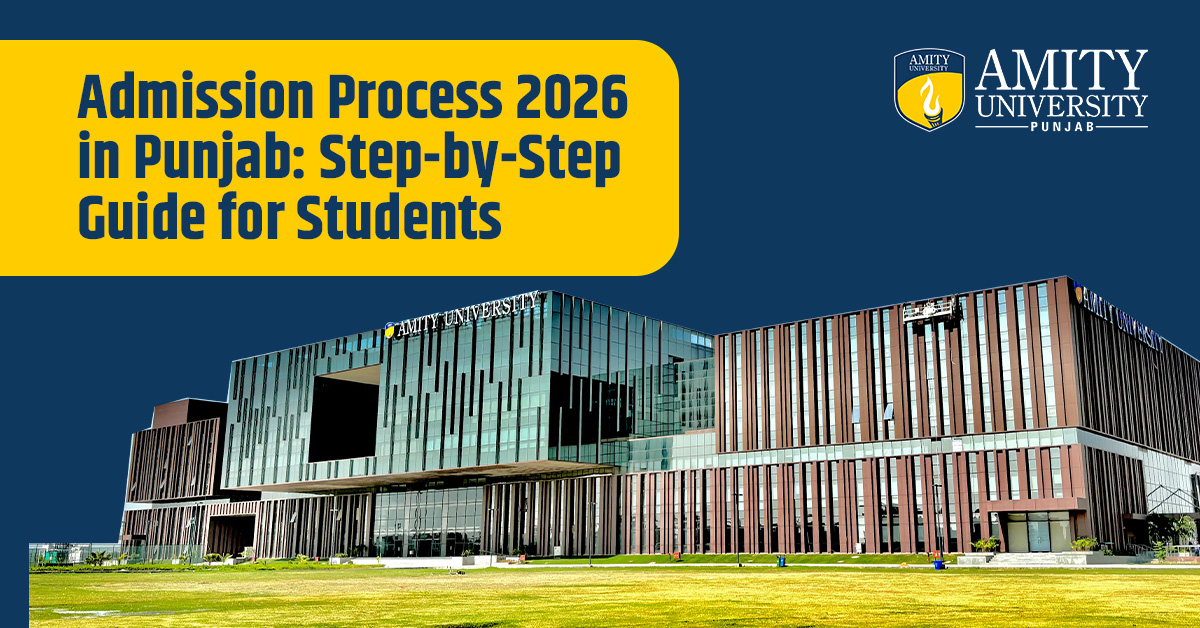
Students looking for a balanced academic environment with industry exposure can explore the programs offered at Amity University Mohali. Reviewing the course structure, campus facilities, and career support can help you make an informed decision about the next step in your academic journey.
The most important factor is how well the course prepares you for real careers, including curriculum relevance, practical exposure, and skill development that aligns with industry needs.
A course is suitable if it matches your interests, strengths, and the type of work you see yourself doing, while also offering clear career pathways and skill-building opportunities.
Placements are not guaranteed anywhere, as they depend on your skills, consistency, and participation in internships, along with the university’s training and industry connections.
Focus on value rather than just cost, considering whether the course justifies the fees through learning quality, exposure, and potential career outcomes.
Some universities allow course changes within a limited time frame, but it depends on their policies, seat availability, and academic requirements, so checking in advance is important.